Home Author
Author

Hannah Lam

Advertisement

The modern Canadian home increasingly hums with connected intelligence: thermostats that learn a family’s schedule, doorbell cameras that stream video to a smartphone from across the continent, voice assistants that manage grocery lists and play the evening news, and lighting systems that shift colour temperature with the time of day. These smart home devices promise convenience, energy efficiency, and a sense of security. A resident can check whether the garage door was left open while sitting in an airport lounge in another province, or receive an alert when an aging parent’s morning routine deviates unexpectedly. The appeal is undeniable, but the invisible trade-off is the continuous generation of personal data that flows from the most intimate spaces of life into corporate servers, often with minimal user awareness of what exactly is being collected and how it might be used.

The data collection practices of smart home ecosystems are extensive by design. A voice assistant must constantly listen for its wake word, and while manufacturers state that audio is not transmitted until that word is spoken, the processing of ambient sound to identify the trigger happens locally on the device. Once activated, the spoken command—whether a request to set a timer or a question about a medical symptom—is typically sent to cloud servers for interpretation and action. That data, along with timestamps, device identifiers, and sometimes location information, can be stored and analysed to improve service quality, train algorithms, and build user profiles. Other devices, such as smart televisions, may track what content is watched and for how long, while robotic vacuum cleaners map floor plans that reveal the layout of a home. Individually, each data point seems innocuous; aggregated, they paint a startlingly detailed portrait of household life.

Privacy protections hinge on a combination of corporate policy, user configuration, and the regulatory framework in which the data resides. In Canada, the Personal Information Protection and Electronic Documents Act requires organizations to obtain meaningful consent for the collection, use, and disclosure of personal information, and to limit collection to what is necessary for the stated purpose. However, those purposes are often buried in lengthy terms of service documents that few consumers read. Users can take defensive steps: disabling microphones when not needed, turning off camera feeds in living areas, segmenting smart devices onto a guest Wi-Fi network, and regularly auditing the permissions granted to companion mobile apps. Manufacturers have started adding physical privacy shutters to cameras and mute buttons that cut power to microphones at the hardware level, but these features are not yet universal.

Pages: 1 2

Advertisement

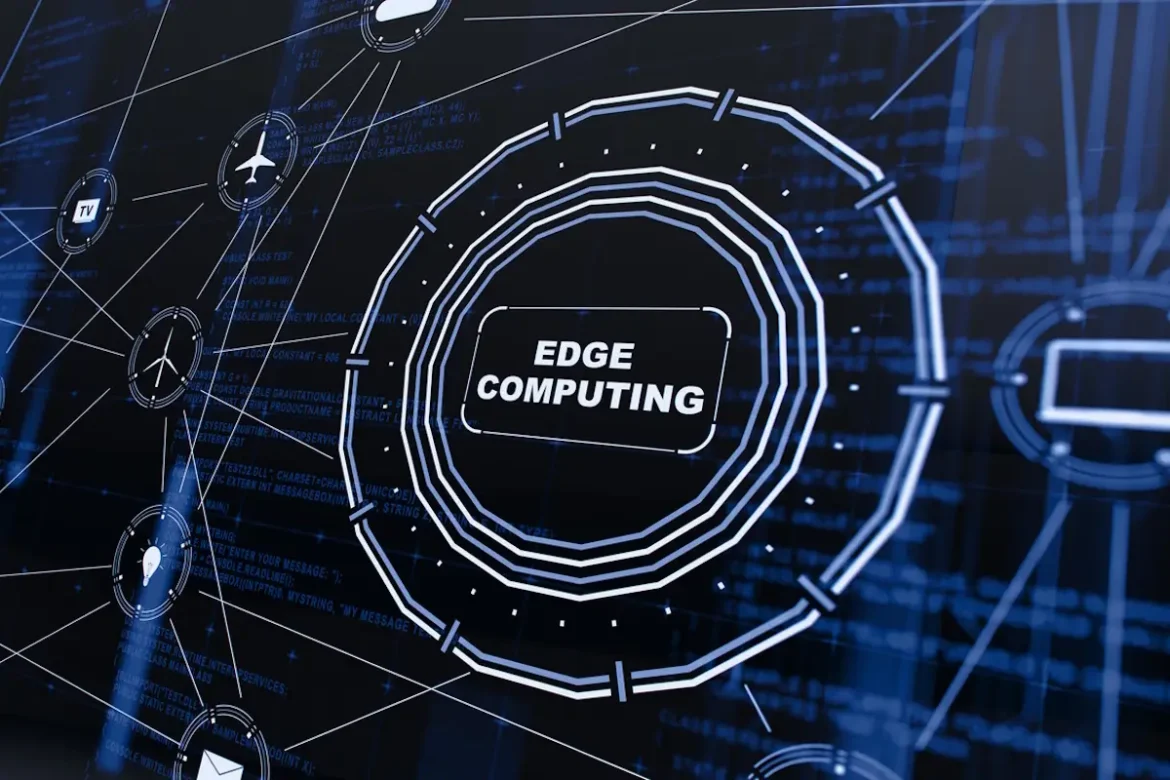
The explosion of connected devices and real-time applications has exposed the limitations of a purely cloud-centric computing model, where all data travels to a distant data centre for processing. Edge computing addresses this by moving computation, storage, and analytics physically closer to where data is generated—on factory floors, inside retail stores, along pipelines, and in vehicles. By trimming the distance that data packets must travel, edge architectures drastically reduce latency, sometimes from hundreds of milliseconds to single-digit microseconds. This seemingly technical metric translates into tangible user experiences: an autonomous braking system that reacts to an obstacle in time, a video analytics tool that instantly alerts a store manager to a safety hazard, or a virtual reality training simulation that feels completely immersive rather than slightly off-sync.

The industrial sector has been among the earliest and most enthusiastic adopters of edge computing. Manufacturing plants in Ontario’s automotive corridor deploy edge servers to collect telemetry from robotic welders, conveyor belts, and quality control cameras. Machine learning models running at the edge can identify microscopic defects in stamped metal parts in real time and halt the line before defective batches are produced, saving materials and energy. Because the analysis happens locally, sensitive production data never needs to leave the plant, satisfying intellectual property and security concerns. These on-site systems continue to function even if the wide-area network link to the cloud goes down, providing the operational resilience that just-in-time manufacturing demands.

Retail and logistics have also been reshaped by edge capabilities. A large grocery chain can place edge nodes in each store to process video from shelf cameras, track inventory levels, and trigger restocking alerts without streaming terabytes of footage across the country. Similarly, a courier company with distribution centres in Vancouver, Calgary, and Montreal can run route optimization algorithms locally, reacting within seconds to traffic accidents or weather closures detected by municipal data feeds. This localized intelligence reduces bandwidth costs and dependence on centralized cloud regions, while still synchronizing aggregated insights back to a corporate data lake for broader trend analysis. It represents a shift from a monolithic data flow to a distributed mesh where decisions are made at the most appropriate tier.

Pages: 1 2

Advertisement

Customer service has long been a critical differentiator for brands, yet it historically relied on large teams of agents handling repetitive queries around billing, order status, and basic troubleshooting. Artificial intelligence is transforming this landscape by automating routine interactions while equipping human agents with deeper insights to resolve complex issues. The integration of natural language processing allows chatbots and virtual assistants to understand typed or spoken questions, discern intent, and retrieve accurate answers from knowledge bases instantaneously. For Canadian companies serving bilingual customers, these systems can switch seamlessly between English and French, recognizing regional variations in phrasing and maintaining a consistent brand voice. This shift is not about replacing human empathy but about redirecting it to moments where it carries the greatest value.

Modern AI-powered chatbots have progressed far beyond the rigid, menu-driven interfaces of the past. They now employ large language models that can parse context, follow conversational threads, and handle follow-up questions without losing track of the original request. When a customer asks about an unexplained charge on their mobile bill, the bot can pull up the account details, explain the line item in plain language, and, if the charge was made in error, initiate a credit—all within the same chat session. This self-service capability reduces average handling time and shrinks the queue of tickets awaiting human attention. Importantly, these systems are designed with escalation paths: if the AI detects frustration or the issue exceeds its authority, the full conversation transcript is handed to a live agent, eliminating the need for the customer to repeat themselves.

Behind the scenes, AI algorithms analyse vast streams of interaction data to surface trends and predict customer needs. Sentiment analysis models gauge the emotional tone of emails, chat messages, and call transcripts, flagging instances where a customer’s satisfaction appears to be deteriorating so that managers can intervene proactively. Predictive analytics can anticipate why a customer is contacting support based on their recent activity—for example, if they visited the help pages for device setup, the system might pre-load troubleshooting steps for the agent or suggest a personalized walkthrough video. Canadian retailers have begun using these insights during peak shopping seasons to optimize staffing levels and prepare agents for the most common inquiries, thereby reducing wait times and cart abandonment.

Pages: 1 2

Advertisement

Small businesses in Canada often operate under the dangerous misconception that cybercriminals exclusively target large corporations with deep pockets. In reality, small and medium-sized enterprises are frequently attacked precisely because they tend to have weaker defences, limited dedicated information technology staff, and a trove of valuable data that includes customer payment details, employee records, and intellectual property. A successful ransomware attack can encrypt critical files and bring operations to a standstill, forcing owners to choose between paying a hefty ransom in cryptocurrency or losing weeks of productivity. The financial repercussions extend beyond the immediate incident, as a breach can erode customer trust, trigger regulatory penalties under Canada’s Digital Privacy Act, and increase future cyber insurance premiums. Understanding the threat landscape is the first step toward building a resilient security posture that matches the business’s size and risk profile.

Phishing remains the most common entry vector for attackers targeting small businesses. A deceptive email crafted to appear as though it comes from a familiar supplier, bank, or even the Canada Revenue Agency tricks an employee into clicking a malicious link or opening an infected attachment. That single action can download malware that silently harvests credentials, installs a keylogger, or provides a foothold for lateral movement across the network. Social engineering tactics have grown increasingly sophisticated, with criminals researching targets on social media to personalize their lures. Training staff to scrutinize sender addresses, hover over links before clicking, and report suspicious messages is an affordable and effective countermeasure. Pairing human vigilance with technical controls like email filtering, multi-factor authentication, and domain-based message authentication protocols creates layered defence that catches many threats before they reach an inbox.

Ransomware has transformed from a nuisance into a structured criminal enterprise, with some groups operating like software-as-a-service vendors that lease their malicious code to affiliates. Once inside a network, ransomware can spread rapidly, encrypting not only local files but also connected backups and cloud storage if permissions are too permissive. Small businesses that rely on a single, always-connected backup drive often discover during an incident that their backup is also locked. The most reliable mitigation strategy is maintaining multiple backup copies following the 3-2-1 rule: three total copies of data, on two different media types, with one copy stored off-site and offline. Regularly testing restoration procedures is equally critical, as a backup that cannot be restored is just an empty promise. Canadian business owners should also consider whether their cyber insurance policy covers ransom payments, forensic investigation, and business interruption costs.

Pages: 1 2

Advertisement

The journey of cloud computing from a speculative concept to the operational backbone of today’s enterprises represents one of the most significant shifts in information technology. In the late 1990s and early 2000s, businesses largely depended on on-premises data centres filled with expensive hardware that required constant maintenance, cooling, and physical space. The emergence of virtualization allowed a single server to run multiple operating systems, but it was the introduction of publicly accessible, internet-delivered computing resources that truly altered the landscape. Early adopters were drawn to the promise of turning capital expenditure into operational expenditure, paying only for what they consumed. This fundamental economic shift allowed startups to access infrastructure that had previously been reserved for large corporations, levelling the playing field and accelerating innovation across sectors from e-commerce to software development.

As cloud services matured, the conversation expanded beyond raw cost savings to encompass scalability, resilience, and global reach. Providers such as Amazon Web Services, Microsoft Azure, and Google Cloud built massive networks of data centres interconnected by high-speed fibre, enabling organizations to deploy applications in regions close to their users. For Canadian enterprises, this meant the ability to serve customers in Toronto, Vancouver, and Halifax with equal responsiveness, while also reaching international markets without constructing physical offices abroad. The cloud’s elastic nature allowed online retailers to handle the surge of Black Friday traffic and then scale down, avoiding the waste of idle servers. This operational flexibility became a competitive necessity rather than a luxury, fundamentally changing how chief information officers planned their technology roadmaps.

The next evolutionary stage was the widespread adoption of hybrid cloud architectures, which combine private on-premises infrastructure with public cloud environments. In Canada, this model found particular favour within regulated industries such as banking, healthcare, and government, where data residency and sovereignty requirements demanded careful control over sensitive information. A financial institution might keep its core transaction processing system within a private data centre monitored by its own security team, while simultaneously using a public cloud’s advanced analytics tools to detect fraud patterns across millions of transactions. Hybrid models also provided a practical migration path, allowing organizations to move workloads gradually rather than attempting a risky, all-at-once transformation. The seamless orchestration between environments became possible through containerization platforms like Kubernetes and management tools that gave a unified view of disparate resources.

Pages: 1 2

Advertisement

Older Posts